
Wire Forms vs Traditional Springs: Which Is Right for Your Application?
According to a report from McKinsey & Company, manufacturers continue to prioritize production efficiency, durability, and component optimization as supply chain pressures and operational costs remain elevated across industrial sectors.
For many industrial applications, selecting the correct mechanical component plays a major role in equipment performance and long-term reliability. Two commonly used solutions are wire forms and traditional springs.
Although they may appear similar, wire forms and springs serve different mechanical purposes and offer different performance advantages depending on the application.
Understanding the differences can help engineers, procurement teams, and manufacturers choose the best solution for their operational needs.
What Are Traditional Springs?
Traditional springs are mechanical components designed to store and release energy.
Common spring types include:
compression springs
extension springs
torsion springs
Springs are typically used to:
absorb force
resist compression
apply tension
control motion
return components to their original position
They are commonly found in:
automotive systems
industrial machinery
valves
medical equipment
appliances
transportation equipment
Spring performance depends heavily on:
material selection
load requirements
deflection range
operating environment
manufacturing precision
What Are Wire Forms?
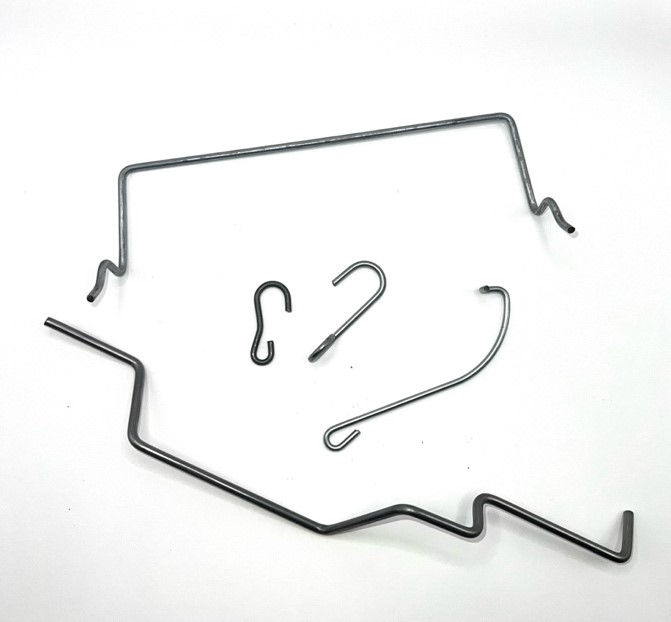
Wire forms are custom-shaped wire components manufactured through precision bending and forming processes.
Unlike traditional springs, wire forms are not necessarily designed to store mechanical energy.
Instead, they are commonly used for:
guiding
retaining
securing
positioning
supporting
connecting components
Wire forms are highly versatile and can be manufactured in a wide variety of custom configurations.
Applications commonly include:
clips
hooks
brackets
retainers
locking mechanisms
support structures
At Southern Precision Spring, we manufacture custom wire forms for industrial and commercial applications requiring precise shaping and dependable performance.
When Should Manufacturers Use Springs?
Traditional springs are often the better solution when an application requires:
force control
motion resistance
energy storage
compression support
rotational tension
For example:
compression springs help absorb force
extension springs apply pulling force
torsion springs create rotational resistance
These capabilities are essential in many industrial systems involving movement and mechanical operation.
When Are Wire Forms a Better Option?
Wire forms are often preferred when the application requires:
custom geometry
lightweight component support
positioning
retention
mechanical guidance
securing assemblies
Because wire forms can be highly customized, they are commonly used in applications where standard spring designs may not provide the necessary configuration or functionality.
Wire forms also allow manufacturers to simplify assemblies in certain applications by combining multiple mechanical functions into a single formed component.
Material Selection Considerations
Both wire forms and traditional springs can be manufactured using a variety of materials depending on application requirements.
Material selection may depend on:
corrosion resistance
strength requirements
fatigue resistance
operating temperatures
environmental exposure
Common materials include:
stainless steel
music wire
hard drawn wire
specialty alloys
Selecting the correct material is important for ensuring long-term performance and durability.
Manufacturing Precision Matters
Whether manufacturing springs or wire forms, precision is critical.
Poor manufacturing quality can lead to:
inconsistent dimensions
reduced durability
assembly problems
premature component failure
Precision manufacturing helps ensure:
consistent tolerances
repeatable performance
proper fitment
dependable operation
At Southern Precision Spring, we focus on delivering precision-manufactured spring and wire form solutions designed for demanding industrial applications.
Engineering Support and Custom Manufacturing
Every application has different performance requirements.
Engineering collaboration helps manufacturers:
optimize component design
improve manufacturability
reduce unnecessary complexity
improve durability
support efficient production
Custom manufacturing capabilities are especially important for applications involving specialized geometries, tight tolerances, or industry-specific requirements.
Final Thoughts
Wire forms and traditional springs each offer unique advantages depending on the application.
Springs are ideal for applications involving force control, tension, compression, and energy storage, while wire forms are often better suited for positioning, retention, guidance, and custom mechanical support.
Understanding the functional requirements of the application helps manufacturers select the best component solution for long-term reliability and operational performance.
At Southern Precision Spring, we manufacture custom springs and wire forms engineered for industrial applications requiring precision manufacturing, dependable quality, and responsive engineering support.
Contact Southern Precision Spring today to discuss your project requirements and request a quote.


